
In today’s technology-driven education landscape, teachers are constantly seeking innovative ways to enhance learning experiences, improve classroom engagement, and reduce administrative workload. EdTech tools have become essential in achieving these goals, offering solutions that support collaboration, assessment, content creation, and personalized learning. From AI-powered assistants to interactive classroom platforms, these tools are reshaping how education is delivered in 2026.
Below is a refined overview of the most effective EdTech tools that every teacher can integrate into their classroom.
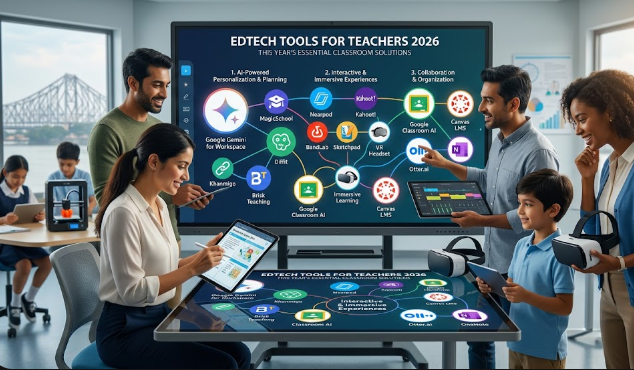
1. Google Workspace for Education
Google Workspace remains one of the most widely used digital ecosystems in schools. Tools like Docs, Slides, Sheets, and Drive allow real-time collaboration between teachers and students. Integration with Google Classroom makes assignment distribution, grading, and communication seamless. Its cloud-based nature ensures accessibility from any device, making it a foundational tool for modern education.
2. Microsoft OneNote
Microsoft OneNote provides a digital notebook system that supports structured lesson planning and collaborative note-taking. Integrated with Microsoft 365 apps like Teams and Word, it allows teachers and students to co-create and organize content efficiently. It is especially useful for schools already using Microsoft ecosystems.
3. Canvas (Instructure)
Canvas is a powerful Learning Management System (LMS) used in K-12 and higher education. It helps teachers manage courses, assignments, assessments, and grading in one centralized platform. Its analytics tools allow educators to track student performance and adjust instruction based on data insights.
4. Kami
Kami is a popular document annotation tool that enables interactive learning with PDFs and digital worksheets. Students can highlight, comment, and collaborate directly on assignments. Its integration with Google Classroom and Canvas makes it ideal for blended learning environments.
5. Kahoot!
Kahoot! transforms assessments into interactive games. Teachers can create quizzes, polls, and challenges that make learning engaging and competitive. It provides instant feedback, helping educators identify learning gaps quickly.
6. Nearpod
Nearpod enhances lessons with interactive slides, quizzes, VR field trips, and real-time student responses. Teachers can deliver content in teacher-paced or student-paced formats, making it highly adaptable for differentiated instruction.
7. Flip (formerly Flipgrid)
Flip allows students to respond through short videos, encouraging participation from all learners, including those who may be less vocal in class. It fosters creativity, discussion, and peer engagement in a safe digital space.
8. Edpuzzle
Edpuzzle turns videos into interactive lessons by embedding questions and quizzes. Teachers can track student engagement and understanding in real time, making it an excellent tool for flipped classrooms and remote learning.
9. MagicSchool AI
MagicSchool AI is an advanced AI assistant designed specifically for educators. It helps generate lesson plans, quizzes, rubrics, and differentiated learning materials in seconds, significantly reducing teacher workload.
10. ChatGPT
ChatGPT supports teachers in lesson planning, content creation, and personalized instruction. It can generate explanations, assignments, and creative learning activities while also supporting student learning through tutoring-style interactions.
11. Google NotebookLM
NotebookLM is an AI-powered research assistant that helps organize learning materials, summarize content, and generate study guides. It is particularly useful for curriculum planning and collaborative research.
12. Canva for Education
Canva allows teachers and students to design presentations, posters, worksheets, and visual content easily. Its templates and drag-and-drop interface make it ideal for creative classroom projects.
13. Quizizz
Quizizz offers gamified assessments that students can complete at their own pace. Teachers receive detailed analytics, helping them monitor performance and adjust teaching strategies.
14. ClassDojo
ClassDojo focuses on classroom management and communication between teachers, students, and parents. It helps track behavior, share updates, and build a positive classroom culture.
15. Schoology
Schoology is a comprehensive LMS that supports course management, grading, discussions, and digital learning resources. It is widely used for structured and scalable online education.
Conclusion
EdTech tools are no longer optional—they are essential components of modern education. The best tools in 2026 focus on improving engagement, simplifying teaching workflows, and personalizing learning experiences. By integrating platforms like Google Workspace, Nearpod, Kahoot!, and AI-powered assistants such as MagicSchool AI and ChatGPT, teachers can create more interactive, efficient, and impactful classrooms.
Ultimately, the goal of EdTech is not just to digitize education, but to make learning more meaningful, accessible, and student-centered.
