
Education is constantly evolving as schools search for ways to make learning more engaging, practical, and meaningful. One effective approach gaining attention in modern education is outdoor learning. Instead of limiting learning to traditional classrooms, outdoor learning encourages teachers and students to use natural environments as spaces for exploration, discovery, and active participation.
Outdoor learning can take place in many settings, including schoolyards, playgrounds, gardens, parks, and nearby natural areas. These spaces provide opportunities for students to observe nature, conduct experiments, work collaboratively, and connect theoretical knowledge with real-life experiences.
For many students, being outdoors makes learning more enjoyable and stimulating. Teachers also find that outdoor environments help create lessons that are interactive, memorable, and relevant. This article explores the concept of outdoor learning, its benefits, and practical strategies for integrating it into school education.
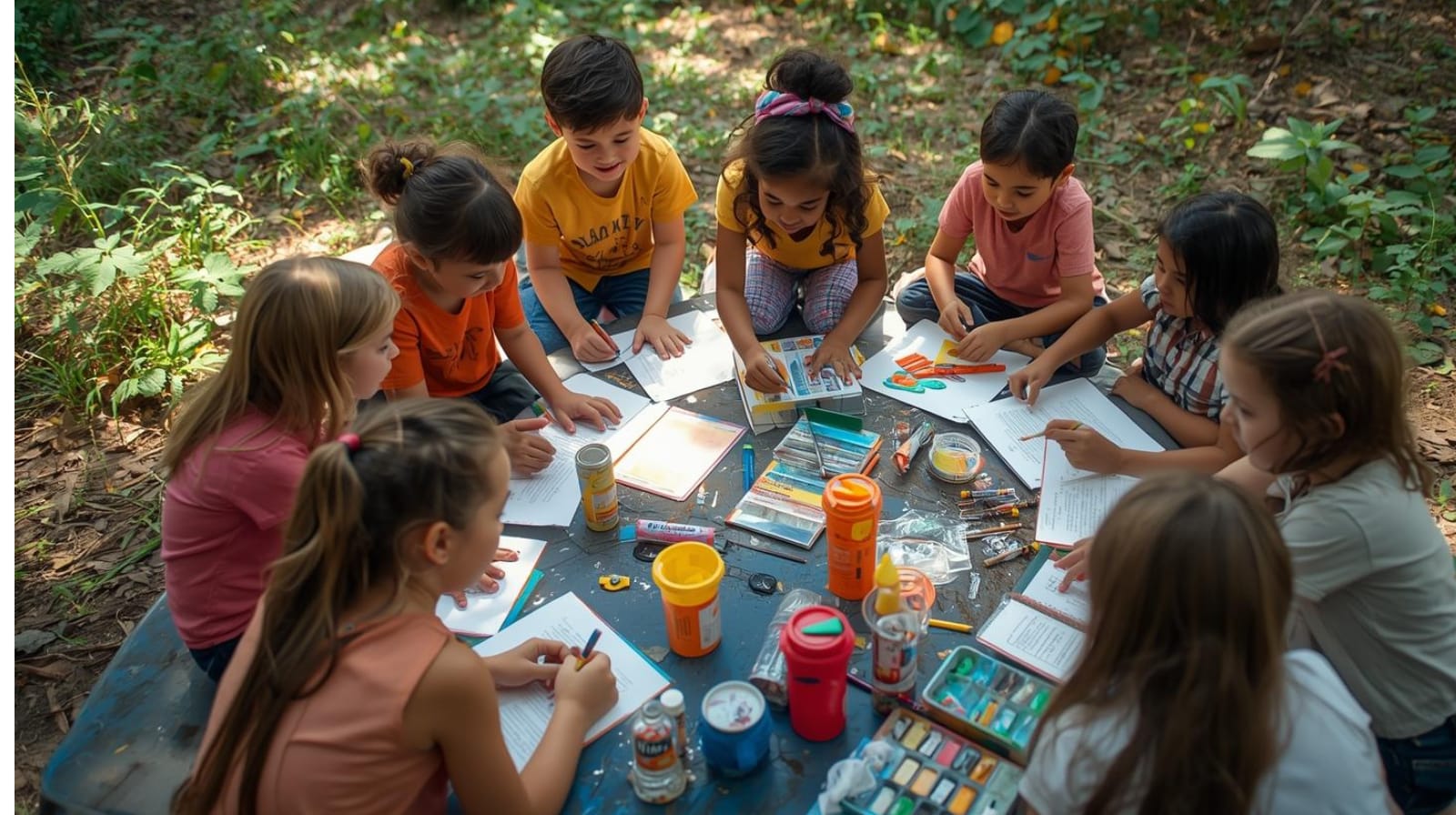
What Is Outdoor Learning?
Outdoor learning refers to educational activities that take place outside the traditional classroom. These activities may be organized within school grounds or in nearby natural environments where students can explore and interact with their surroundings.
The concept of outdoor learning has historical roots in educational practices such as field trips, school camping, and environmental education programs. These approaches became more widely recognized during the twentieth century as educators realized the value of experiential learning.
Outdoor learning includes a wide range of activities such as:
-
Environmental and ecological studies
-
Outdoor play and physical activities
-
School gardening projects
-
Science investigations and fieldwork
-
Team-building and leadership exercises
-
Creative and artistic activities inspired by nature
Although these activities vary in purpose and structure, they all share a common feature: they take place outside the classroom and involve active participation from students.
Importance of Outdoor Learning
Outdoor learning offers several important benefits that support both academic development and personal growth.
Increasing Student Engagement
One of the most significant advantages of outdoor learning is its ability to increase student interest and participation. A change of environment often makes lessons feel more exciting and refreshing. When students can observe real objects and natural environments, they become more curious and motivated to learn.
For example, learning about plant growth becomes more meaningful when students observe plants in a garden rather than simply reading about them in textbooks.
Supporting Physical and Mental Health
Outdoor learning encourages students to move, explore, and interact with their surroundings. Physical activity combined with fresh air and natural light can improve students’ concentration and overall well-being.
Studies have shown that time spent in natural environments can reduce stress and improve mental health. Students who learn outdoors often feel more relaxed and focused during lessons.
Improving Understanding Through Experience
Hands-on learning experiences help students understand complex concepts more effectively. Observing weather patterns, measuring natural objects, or examining soil composition allows students to connect theoretical knowledge with real-world examples.
Such experiences strengthen memory and help students retain information for longer periods.
Developing Social Skills
Outdoor learning activities often involve teamwork and collaboration. Students work together to solve problems, conduct experiments, or complete tasks. These interactions help develop communication skills, cooperation, and leadership abilities.
Promoting Environmental Awareness
Regular interaction with nature helps students develop a deeper appreciation for the environment. They become more aware of ecosystems, biodiversity, and the importance of environmental conservation.
Outdoor learning can therefore play a key role in encouraging responsible attitudes toward nature and sustainability.
Outdoor Learning in School Education
Outdoor learning provides a valuable alternative to traditional classroom teaching. In outdoor environments, students can observe and experience the subjects they study.
For instance, studying soil quality, observing insects, or tracking weather changes allows students to directly interact with scientific concepts.
Although outdoor learning is commonly associated with subjects like science, geography, and physical education, it can benefit many other areas of the curriculum as well. Teachers from different subject areas can incorporate outdoor activities into their lessons.
Planning Outdoor Learning Activities
Successful outdoor learning requires thoughtful planning and preparation. Teachers should ensure that activities are clearly connected to learning objectives and curriculum goals.
Preparation
Before conducting outdoor lessons, teachers should:
-
Check weather conditions
-
Prepare necessary materials
-
Ensure students wear appropriate clothing
-
Inform students about rules and expectations
Being well-prepared helps outdoor lessons run smoothly and safely.
The A.P.P.L.E Method
A useful framework for organizing outdoor learning activities is the A.P.P.L.E method:
-
Assess: Identify the learning objectives of the activity.
-
Plan: Organize tasks that help achieve those objectives.
-
Prepare: Check the weather and the location in advance.
-
Lead: Guide students during the activity with clear instructions.
-
Evaluate: Reflect on the activity and identify improvements for future lessons.
This method helps teachers maintain structure while allowing students to explore and learn freely.
Safety and Risk Management
Safety is an important aspect of outdoor learning. Teachers should examine outdoor locations to identify potential hazards before starting activities.
Important safety measures include:
-
Carrying a first-aid kit
-
Bringing a mobile phone for emergencies
-
Setting clear boundaries for students
-
Ensuring proper supervision
Schools should also follow policies related to parental consent and risk assessment when planning activities outside school grounds.
Equipment for Outdoor Learning
Outdoor learning does not require expensive equipment. However, certain simple tools can enhance the learning experience. Useful materials include:
-
Clipboards and notebooks for recording observations
-
Magnifying glasses for examining small objects
-
Buckets or containers for collecting samples
-
Tape measures or ropes for measurement activities
-
Tarpaulins or mats for sitting outdoors
Appropriate clothing is also important. Students should wear comfortable and weather-appropriate clothing such as waterproof jackets, hats, and sturdy shoes.
Creating Outdoor Learning Spaces
Schools can improve outdoor learning opportunities by creating designated learning spaces outside the classroom. These spaces can be simple and flexible depending on the school’s resources.
Possible outdoor learning areas include:
-
School gardens for studying plants and ecosystems
-
Seating areas for reading or storytelling sessions
-
Observation zones for science investigations
-
Creative spaces for art and craft activities
Some schools build permanent outdoor classrooms, while others use temporary setups for specific lessons.
Learning Beyond School Grounds
In addition to schoolyards, nearby community spaces can provide valuable learning environments. Parks, forests, beaches, and nature reserves allow students to explore different ecosystems and geographical features.
When organizing outdoor lessons beyond school grounds, teachers should consider transportation, supervision, safety, and required permissions.
Examples of Outdoor Learning Activities
Outdoor learning activities can support a wide range of subjects.
Science Activities
Students can observe insects, study plant growth, examine soil samples, and record weather patterns. These activities help students develop observation and scientific investigation skills.
Mathematics Activities
Outdoor environments provide many opportunities for mathematical learning. Students can measure trees or playground equipment, create patterns using natural materials, and collect data about weather or plant growth.
Language and Literacy Activities
Outdoor reading sessions, storytelling circles, and nature journaling help improve creativity and communication skills.
Art and Creativity
Students can sketch landscapes, create sculptures from natural materials, or photograph patterns found in nature.
Environmental Activities
Activities such as planting trees, building bird feeders, or organizing clean-up events encourage environmental responsibility and community engagement.
Overcoming Challenges
Despite its advantages, outdoor learning may present some challenges for teachers.
Limited Space
Some schools may not have large outdoor areas. However, small spaces such as playgrounds or courtyards can still be used effectively for outdoor activities.
Time Constraints
Teachers may feel that outdoor lessons require additional time. Careful planning and clear instructions can help reduce transition time between indoor and outdoor learning.
Weather Conditions
Unpredictable weather can sometimes affect outdoor activities. Teachers should always have an alternative plan and ensure students are properly dressed.
Lack of Confidence
Some educators may feel unsure about teaching outdoors. However, outdoor learning does not require expert knowledge. Teachers can learn alongside their students and gradually gain confidence through experience.
Conclusion
Outdoor learning offers an effective way to enhance modern education by connecting classroom knowledge with real-world experiences. By using outdoor environments as learning spaces, teachers can create lessons that are interactive, engaging, and memorable.
Outdoor activities encourage students to explore, observe, and collaborate while developing academic knowledge and important life skills. They also promote physical health, emotional well-being, and environmental awareness.
Although challenges such as weather, safety concerns, and limited resources may arise, these obstacles can be overcome through careful planning and creativity. Even small outdoor spaces can become valuable learning environments.
Ultimately, outdoor learning reminds us that education does not have to be confined within classroom walls. By embracing nature as a learning space, teachers can inspire curiosity, encourage active participation, and help students develop a lifelong appreciation for the world around them.
Pic credit: Canva AI
