
The rise of artificial intelligence (AI) has revolutionized many sectors, including education. One exciting development is the integration of AI-powered chatbots in classrooms to deliver personalized learning experiences. These chatbots are reshaping how students engage with content, receive feedback, and progress at their own pace, creating a more student-centered learning environment.
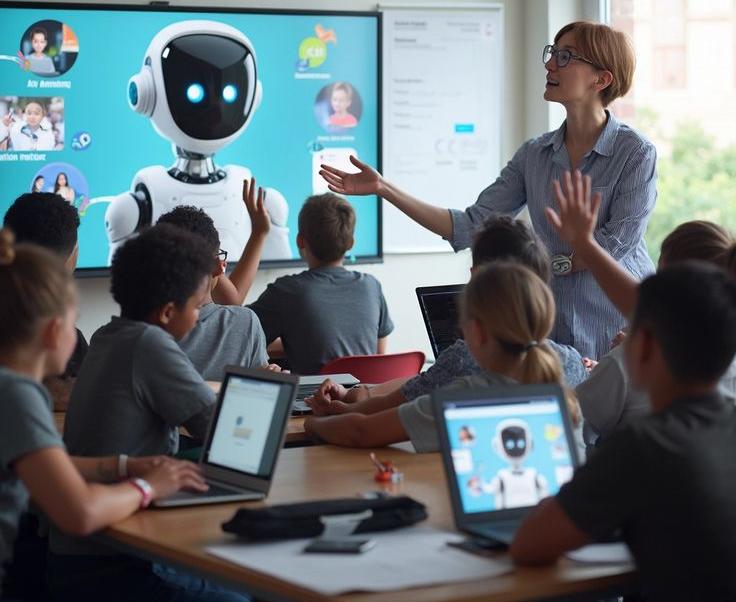
In this article, we explore how AI chatbots are transforming education by tailoring learning to individual needs, fostering engagement, and supporting teachers in their work.
Exploring AI Chatbots in Modern Education
AI chatbots are digital tools designed to simulate human conversation and assist students in real-time. These bots use natural language processing (NLP) to understand and respond to students' questions, provide explanations, or offer guidance. Chatbots can be embedded in educational platforms, apps, or used as standalone tools on messaging platforms.
Key Benefits of AI Chatbots in Personalized Learning
1. Customized Learning Paths
One of the greatest strengths of AI chatbots is their ability to adapt learning material to individual students. Based on a student’s strengths and weaknesses, the bot can recommend activities, lessons, or exercises tailored to their learning level. This ensures that students move forward only when they have mastered a concept, creating a more meaningful learning journey.
2. Instant Feedback and Support
Instead of waiting for teachers to review assignments, students receive instant feedback from chatbots. For instance, a chatbot can correct a math problem immediately or suggest improvements to writing exercises, allowing students to improve in real time. This encourages a growth mindset and makes learning a continuous process.
3. AI Chatbots: Learning Anytime, Anywhere
AI chatbots enable students to learn anytime, anywhere. Whether they need help with homework after school hours or want to revise material over the weekend, the chatbot is always available to assist. This kind of on-demand learning fosters independence and self-paced progress.
4. Fostering Engagement Through Interaction
Interactive chatbots make learning more enjoyable for students. By gamifying quizzes, offering hints during problem-solving, or engaging students through fun conversations, chatbots keep students motivated and attentive. This reduces passive learning and encourages active participation.
5. Reducing Teacher Workload
Teachers spend significant time on tasks like grading, answering repetitive questions, and providing feedback. Chatbots can handle many of these administrative tasks, allowing teachers to focus more on instruction, planning, and individualized support for students.
Challenges and Considerations
While AI chatbots offer numerous benefits, there are some challenges to consider:
- Limited emotional understanding: Chatbots may struggle with interpreting emotional cues or addressing students' frustrations effectively.
- Access inequality: Not all students have equal access to technology, which can create disparities in learning.
- Data privacy concerns: Educational institutions must ensure that students' data is securely managed and compliant with privacy regulations.
The Future of AI-Powered Classrooms
AI chatbots are just the beginning of a broader shift toward smart classrooms. In the future, we can expect more advanced AI systems capable of detecting students' emotional states and providing adaptive support accordingly. Combined with virtual reality (VR) and augmented reality (AR), AI could offer immersive learning experiences tailored to every student’s needs.
Conclusion
AI chatbots are transforming classrooms by offering personalized learning experiences, enhancing student engagement, and reducing the burden on teachers. While challenges remain, the benefits far outweigh the drawbacks. As technology evolves, these chatbots will become even more effective, paving the way for a future where learning is more inclusive, personalized, and engaging.
