
The rapid rise of Artificial Intelligence (AI) has sparked an important debate in the education world can technology replace teachers and traditional learning systems? While AI has already transformed many industries, its role in education is more complex. The question isn’t just about efficiency—it’s about whether machines can truly replicate the empathy, guidance, and mentorship that human educators provide.
The Strengths of AI in Learning
AI has brought remarkable improvements to the way students learn. One of its greatest advantages is the ability to personalize education. By analyzing student performance and behavior, AI systems can adapt lessons to suit individual learning styles and pace. This ensures that each learner receives targeted support where needed.
Another key benefit is instant feedback. AI tools can quickly identify errors in subjects like mathematics or language learning, helping students correct mistakes in real time. Additionally, AI-powered platforms are available around the clock, offering continuous learning support beyond school hours.
AI also excels in data analysis. It can track progress, detect patterns, and highlight areas where students may be struggling. These insights allow for more focused and effective learning strategies, making education more efficient and results-driven.
Why Human Educators Remain Essential
- Emotional Intelligence & Empathy: Teachers understand student's emotions, motivations, and learning challenges, which AI cannot replicate.
- Critical thinking & creativity: Educators encourage analytical thinking, problem-solving, and creativity—skills that AI may find difficult to replicate in the near future.
- Moral & Ethical Guidance: Teachers shape character, instill values, and guide students in making ethical decisions.
- Adaptability & Human Interaction: Real-world human to human discussions, classroom debates, and peer interactions cannot be replaced by machines.
The Rise of Hybrid Learning
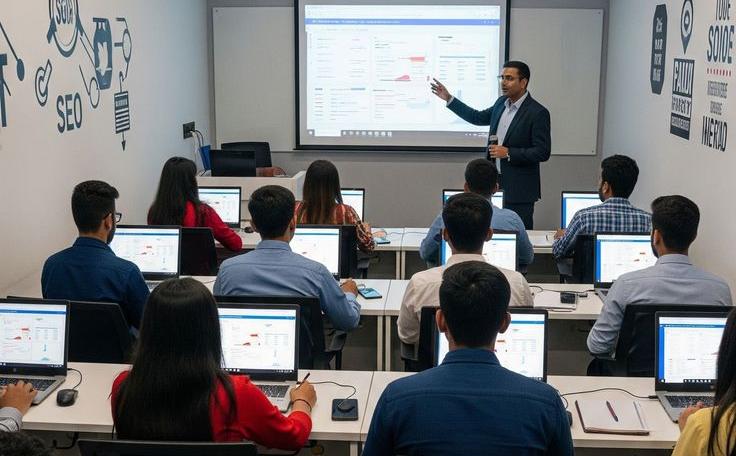
Rather than replacing teachers, AI is reshaping how education is delivered. Hybrid learning models are emerging as the future, combining the strengths of technology with human instruction. In such environments, AI supports teachers by handling routine tasks like grading, assessments, and administrative work.
This allows educators to focus more on engaging students, encouraging discussions, and providing personalized mentorship. Smart classrooms and blended learning approaches create a balanced system where technology enhances, rather than replaces, human teaching.
Teachers as Mentors in the Digital Age
As AI takes over repetitive tasks, educators will shift towards mentorship, guiding students in:
- Critical thinking and problem-solving.
- Ethical decision-making and social responsibility.
- Interpersonal and leadership skills
- Adapting to new technologies
Conclusion
Artificial Intelligence is a powerful tool that is transforming education, but it is not a substitute for human teachers. While AI improves efficiency, accessibility, and personalization, it cannot replace the emotional connection, guidance, and inspiration that educators provide.
The future of education lies in collaboration, where AI supports teachers and enhances learning experiences. By embracing this balance, we can create a system that not only imparts knowledge but also nurtures well-rounded individuals ready to lead and innovate.