
In recent years, India has witnessed a remarkable transformation in engineering education, particularly in robotics, automation, and intelligent systems. Premier technical institutes and emerging private universities alike are launching specialized courses, research centers, and industry-ready programs. These initiatives aim to prepare students for the era of automation and Industry 4.0. This surge reflects global technological trends while also aligning with a national focus on equipping the workforce with skills critical for future economic and defense capabilities.
Robotics: From Electives to Core Programs
Traditionally, robotics education in India was limited to elective modules within engineering programs or research projects in specialized labs. Today, robotics and automation are becoming central to undergraduate, postgraduate, and executive education. Rapid adoption in manufacturing, healthcare, logistics, defense, and smart infrastructure has pushed universities to expand course offerings and create dedicated departments to meet both student and industry demand.
Several institutions now offer interdisciplinary robotics programs that integrate artificial intelligence (AI), machine learning (ML), sensor technology, mechanics, and embedded systems. These courses combine theoretical foundations with practical, application-driven training. Many also explore emerging areas such as human-robot interaction, autonomous systems, drone engineering, and intelligent automation.
Leading Institutes Driving Robotics Education
India’s top-ranked technical universities are at the forefront of this evolution. Many offer executive-level programs designed to enhance both technical and managerial skills. Typical programs cover robotic programming, sensing and perception systems, actuators, motion systems, AI-enabled control, and practical prototyping — equipping students with industrial-ready skills.
Other universities are integrating AI and robotics into new BTech and MTech curricula. These programs blend data science, computational engineering, and smart systems with traditional engineering education. Additionally, these institutes serve as hubs for high-impact research and industry collaborations, strengthening India’s robotics talent pipeline.
Emerging Universities Expanding Robotics
Robotics education is no longer confined to traditional centers of excellence. Emerging universities across India are establishing specialized programs and research centers, offering advanced programs, hands-on labs, and research opportunities.
Many institutions are integrating AI at the heart of their curriculum, preparing students for careers in intelligent systems and robotics. Even traditional engineering universities are introducing specialized programs in robotics and automation engineering, focusing on problem-solving and innovation development.
Research Collaborations and Global Exposure
India’s academic ecosystem is increasingly engaged in international collaboration. Some universities are leading initiatives that connect faculty with global partners for advanced training. These programs aim to establish state-of-the-art robotics hubs equipped with modern software and hardware, nurturing future researchers and educators.
These collaborations bring global best practices to Indian classrooms and help bridge gaps between domestic curricula and international standards. Students gain exposure to cutting-edge methodologies, fostering skills necessary for global competitiveness in robotics research.
Hands-On Learning: Labs, Competitions, and Practical Exposure
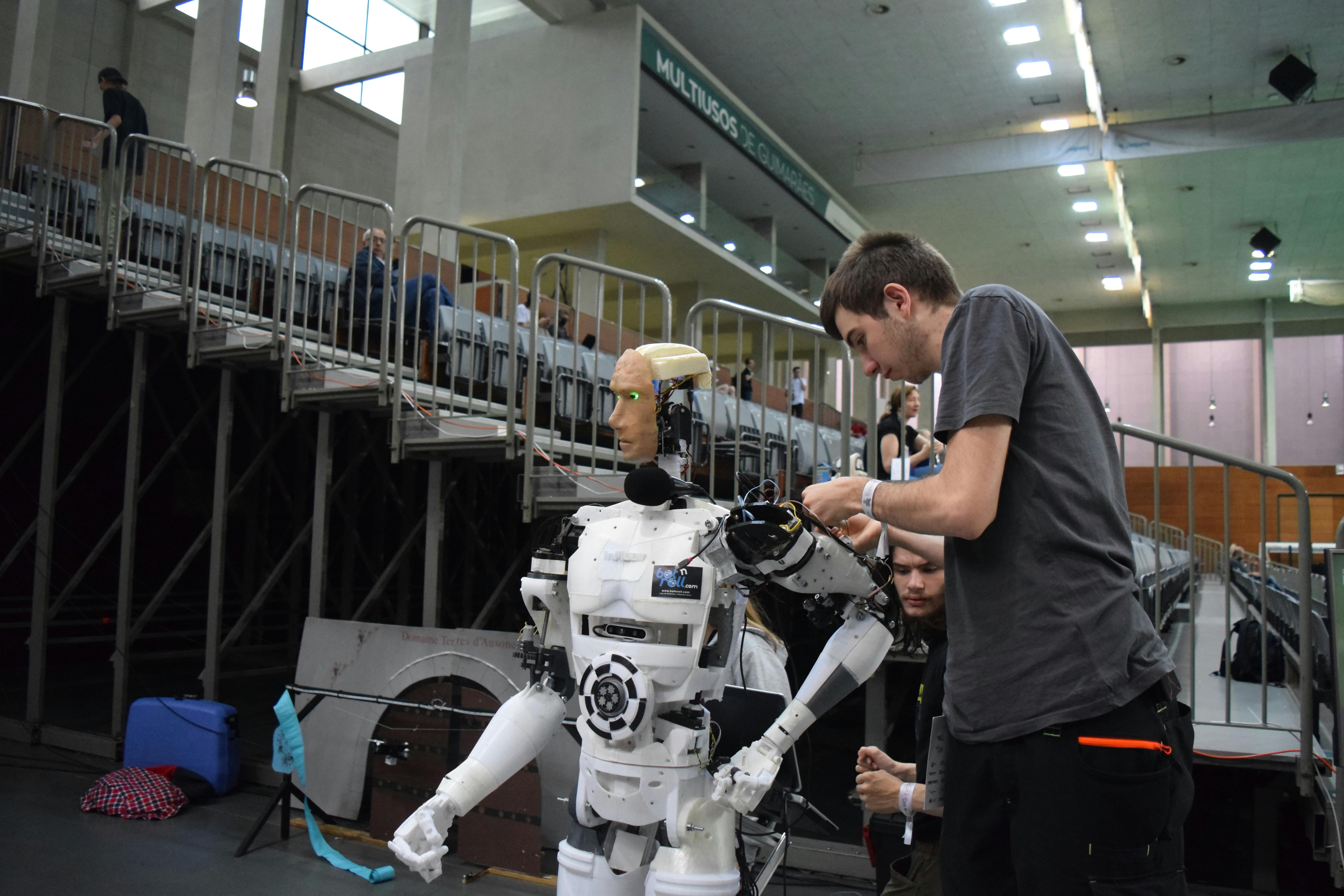
Practical experimentation is central to robotics education. Many universities are setting up specialized labs where students work on autonomous robots, humanoids, and intelligent devices. These labs provide hands-on experience with simulation platforms, embedded systems, AI-based perception systems, and mechatronic design — essential for careers in robotics engineering.
Competitions and robotics challenges foster problem-solving and teamwork. Multi-day robotics and AI camps, hackathons, and student-driven projects provide early exposure to engineering concepts, sparking interest in young learners and encouraging innovation.
Bridging the Industry Gap
Industry readiness is crucial for robotics graduates. Many programs emphasize internships, capstone projects, and partnerships with companies in manufacturing, defense, logistics, and automation. These initiatives allow students to tackle real-world industry challenges.
Professional development courses help mid-career engineers stay current with evolving technologies. Government initiatives have expanded robotics education to smaller colleges, democratizing access to advanced training.
Challenges and Opportunities in Robotics Education
Despite growth, challenges persist. Many institutions struggle with funding, faculty expertise, and infrastructure. Advanced robotics labs require substantial investment in hardware, software, and trained personnel. Universities in smaller cities may face limitations that affect program scale and quality.
Industry expectations are high, requiring students to have practical experience and interdisciplinary knowledge across mechanical, electrical, and software systems. Yet, these challenges also present opportunities for faculty development, research commercialization, and stronger industry-academia partnerships. Universities are updating curricula to include experiential learning, project-based assessments, and exposure to AI and IoT technologies, fostering innovation among students.
Conclusion
India’s focus on robotics and automation aligns with global digital transformation trends. Government support, growing demand for automation professionals, and an expanding startup ecosystem create fertile ground for robotics education to flourish. Universities are increasingly equipped to produce engineers capable of designing autonomous systems, intelligent machines, and smart robotic platforms.As robotics courses expand — from undergraduate programs to specialized postgraduate and professional education — India will see more students entering the workforce prepared to advance the country’s technology ecosystem.