
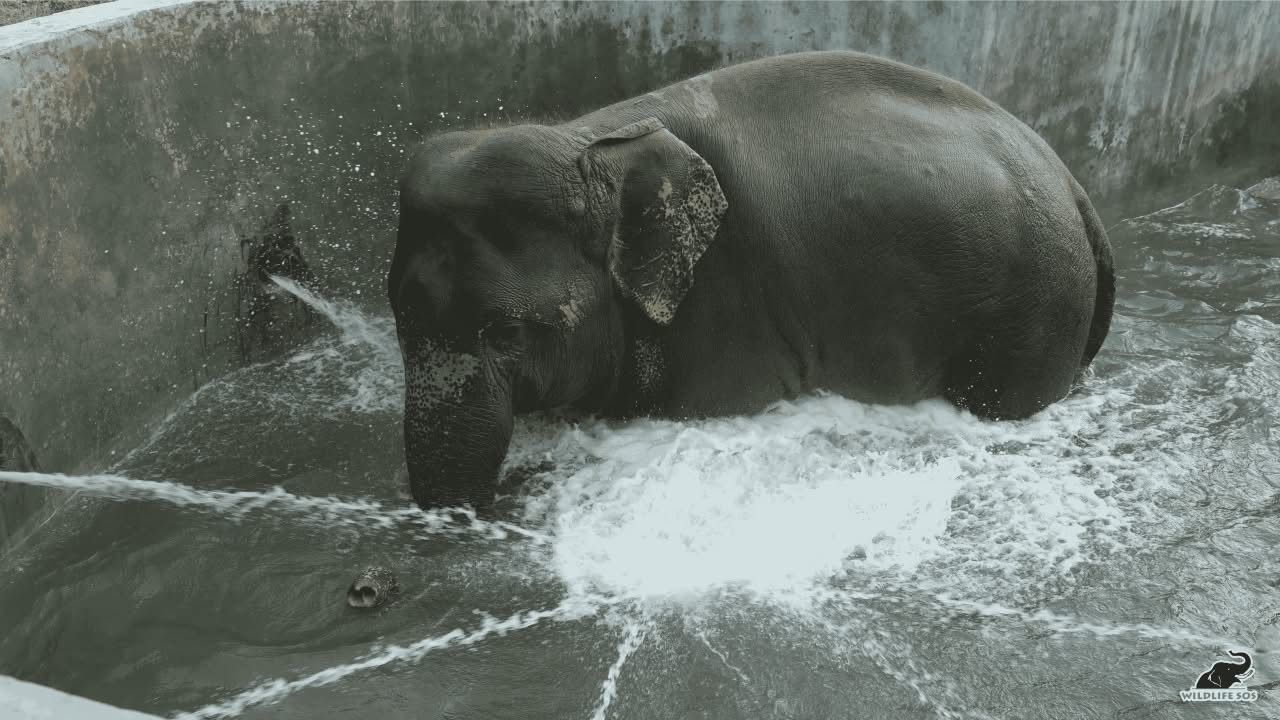
New Delhi, 28 October 2026: For an elephant living with muscular skeletal disorders, including chronic degenerative joint diseases, debilitating conditions and angular deformities, even a few steps can be a struggle. Years of standing on hard surfaces, restricted movement, prolonged chaining and physical exploitation can leave rescued elephants with lasting conditions that cannot simply be reversed. In Wildlife SOS’s Elephant Hospital at its Elephant Camp, a specialised hydrotherapy pool, India’s first dedicated facility of its kind for elephants, is offering another way to support their mobility, comfort and everyday well-being.
Equipped with 21 specially designed water jets, the pool creates a massage-like effect while the buoyancy of water reduces the weight borne by an elephant’s feet and limbs. This can make movement more comfortable for elephants with certain chronic conditions and provide opportunities for supported physical activity. Measuring 15 feet wide, 46 feet long and 11 feet deep, the facility forms part of Wildlife SOS’s approach to individualised veterinary care.
The significance of the facility becomes clearer through the experiences of the elephants who use it. Manu, a blind elephant diagnosed with degenerative joint disease, was found lying down for three days before his rescue. Today, he undergoes hydrotherapy sessions lasting one to two hours to support his joint health and mobility. The buoyancy of the water helps reduce the load on his joints and supports movement; the sessions have also helped him rest and sleep better. Holly, who lives with chronic osteoarthritis affecting all four limbs, spends approximately three to five hours a day in her pool, where the water supports her body and allows her to rest more comfortably.
Bani, a young elephant calf rescued after a train collision, suffered severe injuries that left her paralysed and unable to feel or move her hindlimbs. As part of her rehabilitation, hydrotherapy allows her to exercise in water, which supports her body weight and helps improve muscle strength, joint mobility and movement while minimising the risk of further injury.
For elephants with long-term medical conditions, the difference is not necessarily a dramatic cure, but the possibility of greater comfort in daily life. Hydrotherapy does not reverse underlying disease or replace conventional veterinary treatment. Instead, when recommended by the veterinary team, it can complement an elephant’s wider care plan, with the nature and duration of sessions adapted to the animal’s individual condition and response.
In the Elephant Hospital at Elephant Camp, the approach extends beyond the specialised hydrotherapy facility. Wildlife SOS has 27 pools within individual elephant enclosures, offering opportunities for soaking, movement, cooling, enrichment and rest. Carefully designed access is also important: pools with gentle slopes rather than steep steps can help elephants with foot disorders enter and exit more easily, minimising unnecessary pressure on their limbs.
Lakshmi, another elephant, was rescued in a severely malnourished condition; she suffers from chronic arthritis, joint deformities and painful foot conditions. Her specially designed enclosure pool features a gentle slope instead of stairs, allowing her to enter and exit with greater ease.
Dr. S. Ilayaraja, Deputy Director, Veterinary Services, Wildlife SOS, said, “Hydrotherapy is not a one-size-fits-all intervention, nor is it a replacement for conventional veterinary treatment. Our approach is to understand what each elephant can comfortably manage and adapt the treatment accordingly. The focus is not always on reversing the damage, but on managing its effects and improving the animal’s comfort and quality of life.”
Geeta Seshamani, Co-founder and Secretary of Wildlife SOS, said, “Caring for rescued elephants who have endured years of physical hardship requires sustained commitment and specialised care. Their recovery does not end with rescue. We must continue investing in rehabilitation facilities, veterinary expertise and the resources needed to support them throughout their lives.”
As India continues to care for elephants rescued from distressing conditions, facilities that support long-term rehabilitation are an important part of the broader conservation infrastructure. Rescue is only the beginning: many elephants require years of veterinary attention, specialised nutrition and ongoing management of chronic conditions. Access to water-based therapy, where clinically appropriate, can add another dimension to this care.
The experience at Wildlife SOS also raises a wider question for elephant welfare in India: how can specialised rehabilitation infrastructure be expanded to meet the needs of more rescued elephants across the country? Developing such facilities requires investment, veterinary expertise, appropriate design and sustained caregiving resources. While hydrotherapy will not be suitable for every elephant, the potential of carefully planned, individualised water-based care merits greater attention as India strengthens its long-term approach to elephant rescue and rehabilitation. The challenge now is to ensure that such possibilities become an increasingly important part of how rescued elephants are cared for.