Bhubaneswar, July 2: Despite steady improvements in child nutrition indicators over the past few years, malnutrition continues to pose a significant public health challenge in Odisha, particularly in remote tribal and hard-to-reach regions. To strengthen early detection and ensure timely nutritional intervention, the Odisha Government has launched the first phase of Ojan Utsav 2026 under Mission Poshan 2.0, which will be conducted from July 1 to July 25 across the state.
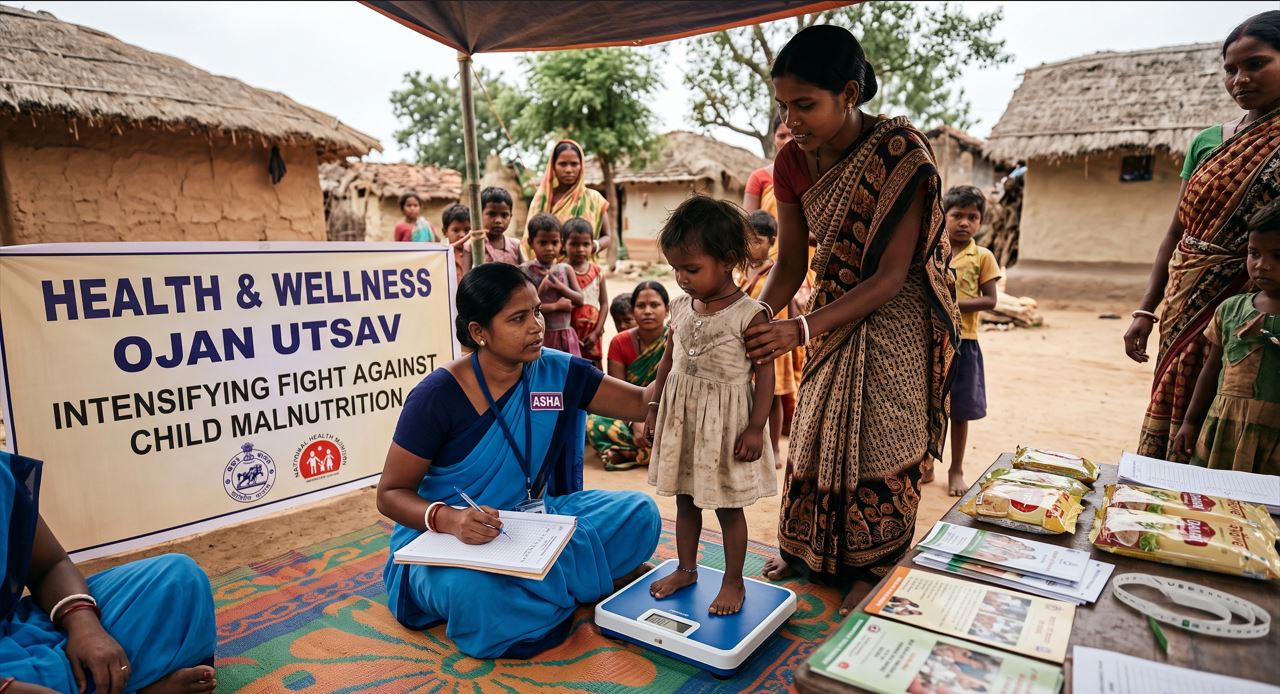
Representational image
Ojan Utsav is a biannual growth monitoring and measurement campaign aimed at assessing the height and weight of children below five years of age. The initiative seeks to identify children affected by Severe Acute Malnutrition (SAM) and Moderate Acute Malnutrition (MAM) at an early stage and connect them with appropriate nutrition and healthcare services.
This year's campaign places special emphasis on covering children living in remote, tribal and cut-off villages, ensuring that even the most inaccessible communities receive essential growth monitoring. Anganwadi Workers, ICDS Supervisors and frontline health functionaries are conducting the exercise across more than 72,000 Anganwadi Centres in Odisha.
Unlike routine growth monitoring, Ojan Utsav is conducted under the direct supervision of ICDS officials to ensure accurate anthropometric measurements. The height and weight data collected during the campaign are uploaded in real time to the Poshan Abhiyaan digital platform, enabling authorities to monitor children's nutritional status and initiate timely interventions wherever required.
According to available data, nearly 29.1 per cent of children under five in Odisha are stunted, reflecting chronic undernutrition. Around 12.8 per cent are underweight, while 2.9 per cent suffer from wasting. The burden of Severe Acute Malnutrition remains concentrated in districts such as Mayurbhanj, Keonjhar, Malkangiri and Nabarangpur, where geographical isolation and socio-economic challenges continue to affect child health outcomes.
Tribal communities continue to face disproportionate nutritional challenges. Among Particularly Vulnerable Tribal Groups (PVTGs), undernutrition remains significantly higher than the state average, highlighting the need for focused interventions in remote habitations.
Experts attribute child malnutrition to a combination of poverty, food insecurity, poor maternal nutrition, inadequate sanitation and drinking water facilities, and difficulties in delivering healthcare services to inaccessible villages. These factors often delay early identification and treatment of vulnerable children.
To address these challenges, the state has strengthened its nutrition strategy through Mission Poshan 2.0, the Mukhyamantri Poshan Yojana, AMLAN (Anaemia Mukta Lakshya Abhiyaan) and the expansion of Anganwadi services in underserved areas. Ojan Utsav complements these initiatives by generating accurate growth data that supports evidence-based planning and targeted nutritional interventions.
Officials of the Department of Women and Child Development said the campaign is not merely a data collection exercise but a statewide effort to ensure that every child receives an equal opportunity to grow healthy. They appealed to parents and caregivers to participate actively in the campaign by bringing their children to the nearest Anganwadi Centre for growth assessment.
With the first phase continuing until July 25, the Government aims to strengthen child nutrition surveillance and reaffirm its commitment to building a healthier, malnutrition-free Odisha by ensuring that no child is left behind, irrespective of where they live.