
Bhubaneswar, Nov 28 (UDN): In a significant step towards strengthening disaster preparedness through clean energy, Odisha has piloted solar-powered battery storage systems at two multipurpose disaster shelters in Puri district, aiming to ensure uninterrupted electricity during prolonged power outages.
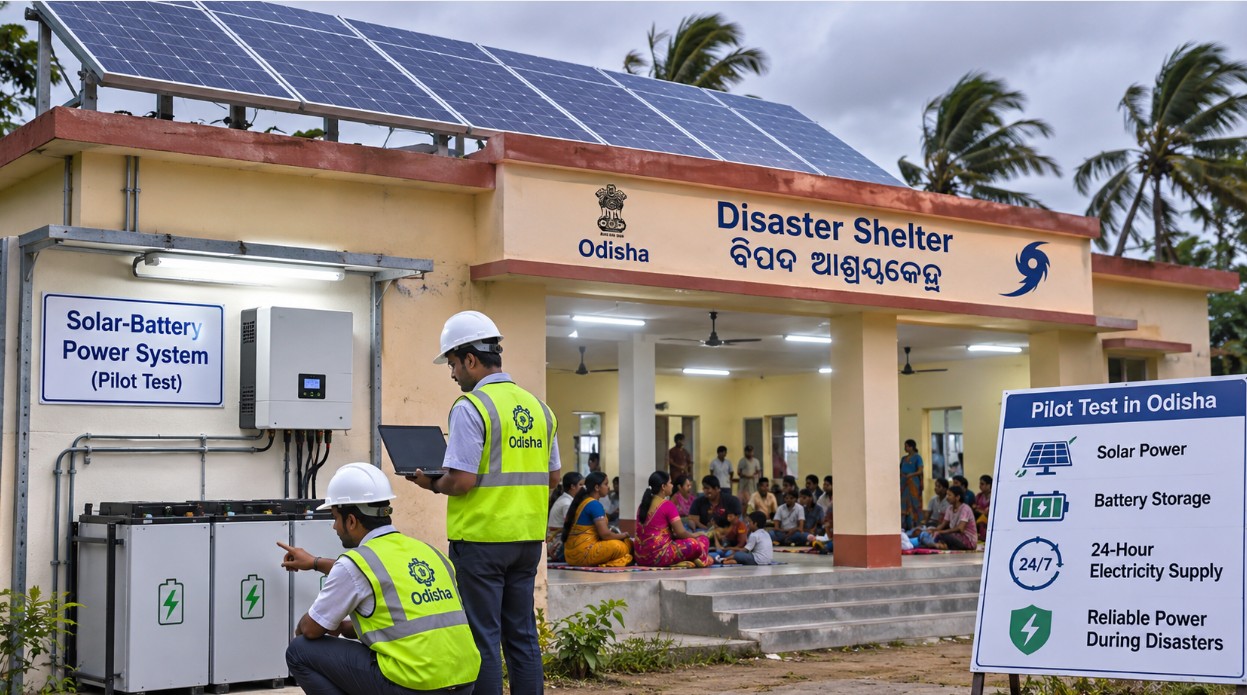
Representational Image
The initiative, undertaken by the Odisha State Disaster Management Authority (OSDMA) in collaboration with the Integrated Research and Action for Development (IRADe), seeks to make critical community infrastructure more resilient to cyclones, floods and other natural disasters.
Under the pilot project, two disaster shelters at Narasinghpatana in Brahmagiri block and Keutajanga in Astaranga block have each been equipped with a 3 kWp solar hybrid power system integrated with Battery Energy Storage Systems (BESS).
The installations are designed to meet essential electricity requirements for more than 24 hours during extended disruptions to the conventional power grid, subject to battery capacity, energy consumption, system configuration and other operational conditions.
The initiative was highlighted at a state-level workshop organised by OSDMA and IRADe in Bhubaneswar on Thursday, where experts and stakeholders discussed strategies for developing disaster-resilient energy infrastructure through battery storage and electric mobility solutions.
Presenting the findings of a technical and financial feasibility study, IRADe Deputy Director Dr Prabal Ghosh said appropriately designed solar photovoltaic systems combined with battery storage could significantly reduce disaster shelters' dependence on conventional grid electricity and diesel-powered backup systems.
The study also pointed to the potential for lowering electricity consumption from the grid and reducing associated operational expenses under normal conditions, while ensuring a more dependable source of power during emergencies.
Reliable electricity is particularly important at multipurpose disaster shelters, which serve as temporary refuge centres during extreme weather events. Power interruptions can severely affect essential services, including lighting, drinking water supply, communication facilities and other emergency support systems.
OSDMA Executive Director Sushmita Behera appreciated IRADe's collaboration in taking forward the initiative, while OSDMA Adviser Dr Kamal Lochan Mishra described the project as an important step towards incorporating clean energy technologies into disaster risk reduction strategies.
IRADe Director Rohit Magotra emphasised the importance of combining conventional infrastructure with modern energy technologies to strengthen energy security and improve the resilience of community shelters.
OSDMA, the Puri District Disaster Management Authority and the respective block administrations extended support for implementing the pilot installations.
Representatives from the Energy Department, renewable energy agencies, electricity distribution companies, village-level disaster shelter management committees, solar technology developers, battery manufacturers, research institutions and civil society organisations participated in the workshop.
The pilot project could provide a model for expanding decentralised renewable energy systems across Odisha's disaster-prone regions, where dependable electricity is essential for emergency response and community safety.
By integrating solar generation with battery storage, the state is exploring a practical approach to keeping critical facilities operational even when conventional power infrastructure is disrupted by severe weather events.